How to Photograph Newborn Twins
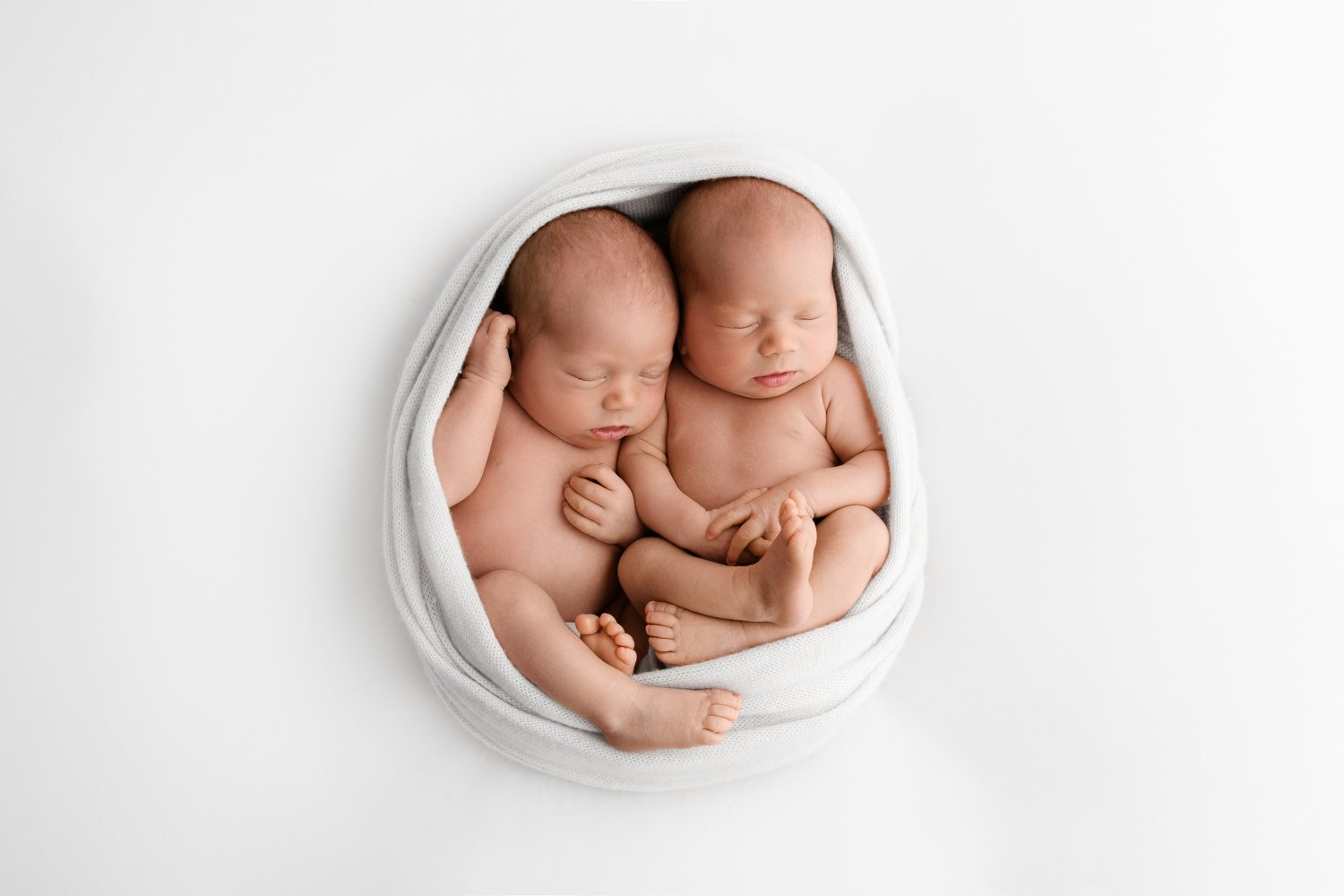
Photographing newborn twins is something many photographers feel nervous about before they have done it. What if one baby is unsettled while the other is asleep? What if both cry at the same time? What if the whole session descends into chaos?
The truth is that parents of twins already understand this better than anyone. They have been living it since the day their babies arrived. Two babies, two different needs, two different rhythms, all at the same time. They are not expecting perfection and they will not be surprised if things take a little longer than a singleton session. That understanding from the parents actually makes twin sessions some of the most relaxed and enjoyable sessions I shoot.
The key is to stay calm, create a settled environment and go with the flow. One baby at a time if necessary. Everything else follows from there.

Careful Planning and Flexibility
Before the session I always have a brief conversation with the parents, either when they arrive or beforehand, to understand what matters most to them. Are family portraits a priority or do they want the focus to be entirely on the babies? Do they want the twins photographed together, separately or both?
I ask them to identify their 3 must have shots. The images that, whatever else happens, they need to leave with. This means that even if one baby has a difficult morning, we always capture what matters most. Having a clear plan while staying completely open to adapting it is the foundation of a good twin session.
Photographing Identical Twins Individually
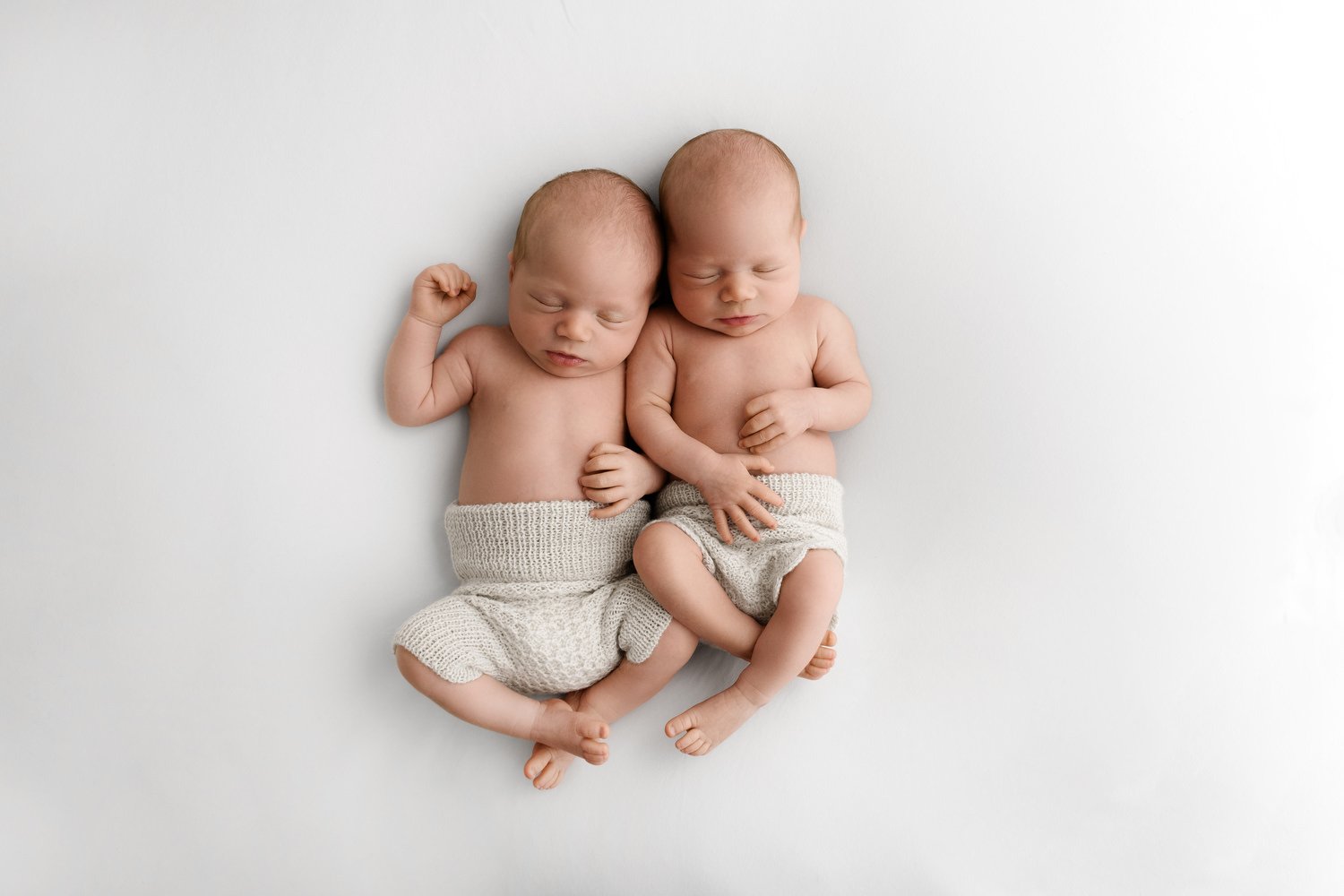
These particular twins are identical, which presents a specific and very practical challenge. Even parents of identical twins can sometimes struggle to tell their babies apart in photographs, particularly in the early days when the differences are so subtle. As the photographer, the responsibility of keeping track of who is who falls entirely on you.
My solution is simple. Before the session I write each baby's name on a Post-it Note and place it in the frame for their individual portraits. It takes seconds, it edits out easily and it saves enormous confusion when sorting through images afterwards. It sounds almost too simple but it works perfectly every time.
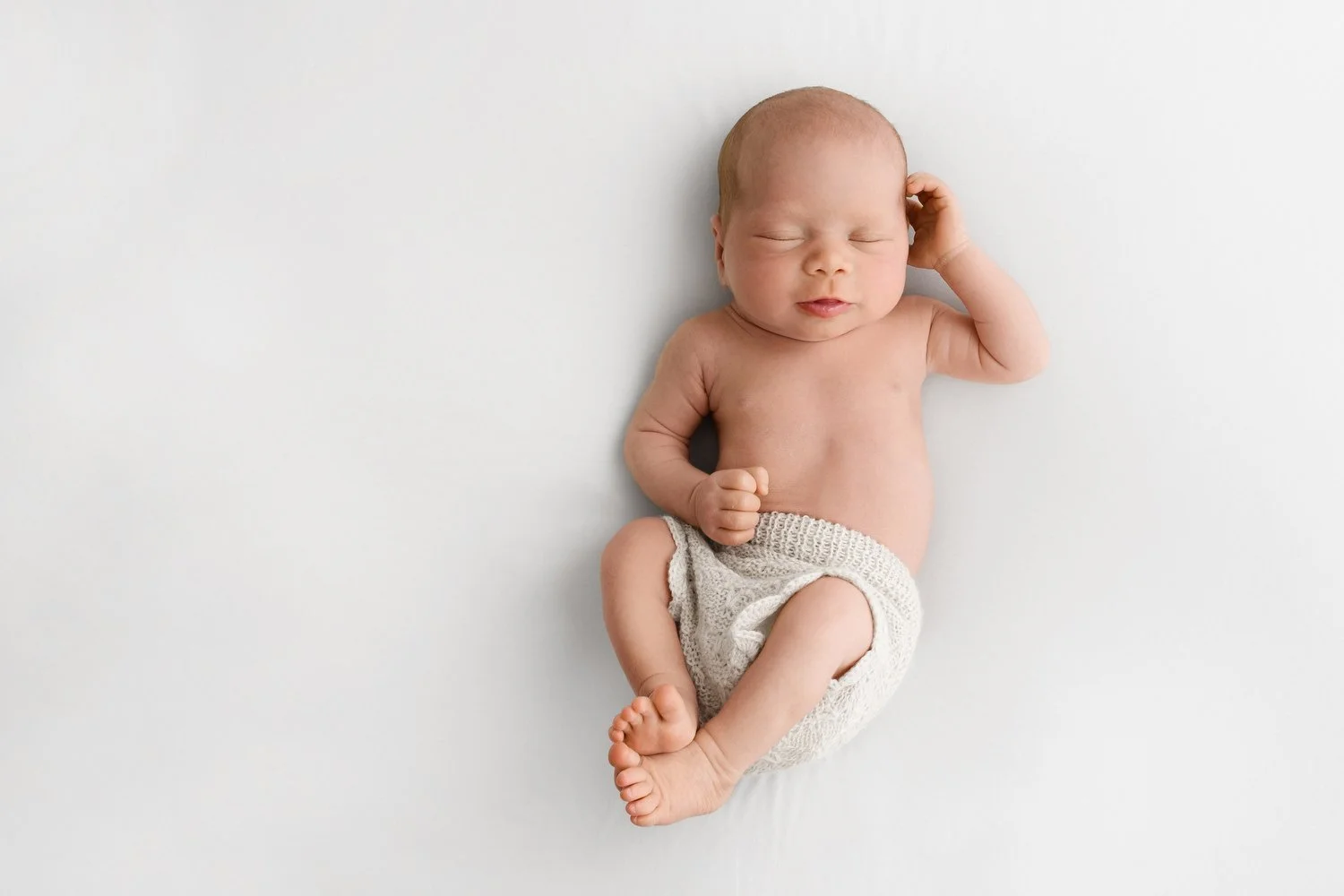
I always make sure to shoot solo portraits of each baby, often creating matching shots or mirroring poses so the images sit beautifully together as a set. Whatever you do for one twin you do for the other. Every pose, every angle, every setup. This matters not just for consistency but because both babies deserve equal prominence in their gallery.
Camera Angle and Focus When Photographing Twins Together
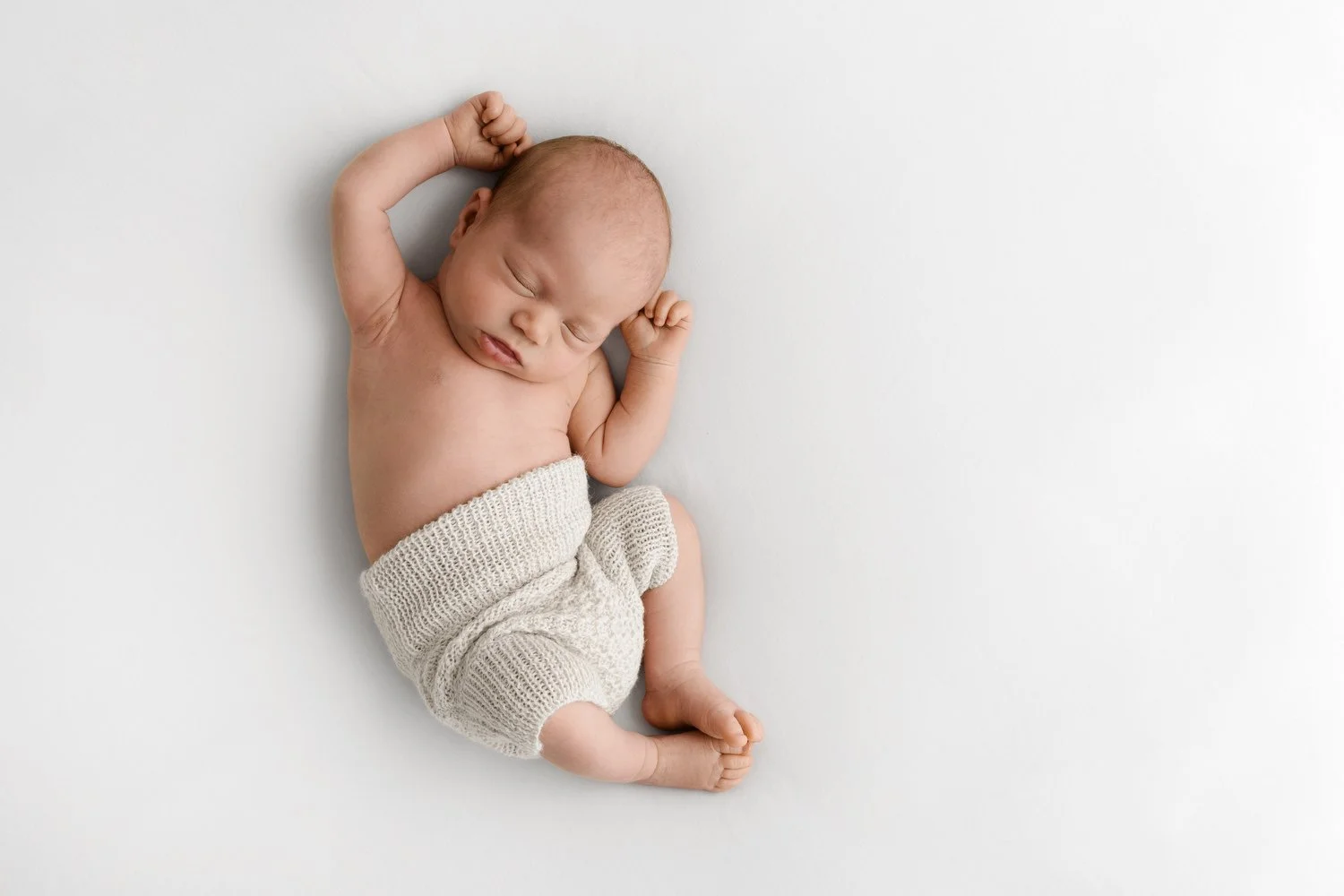
This is one of the most practical and important things I can share about twin sessions. When photographing both babies together, shooting from directly overhead is by far the most effective approach.
Position your camera directly above both babies and you will find that your normal camera settings work perfectly without any need to adjust. Both twins will appear the same size and have equal prominence in the frame. It is the simplest way to create a beautifully balanced image of two babies together.
It also gives the image that natural lifestyle feel, as though you are simply looking down at two babies lying peacefully together rather than a carefully constructed studio shot.
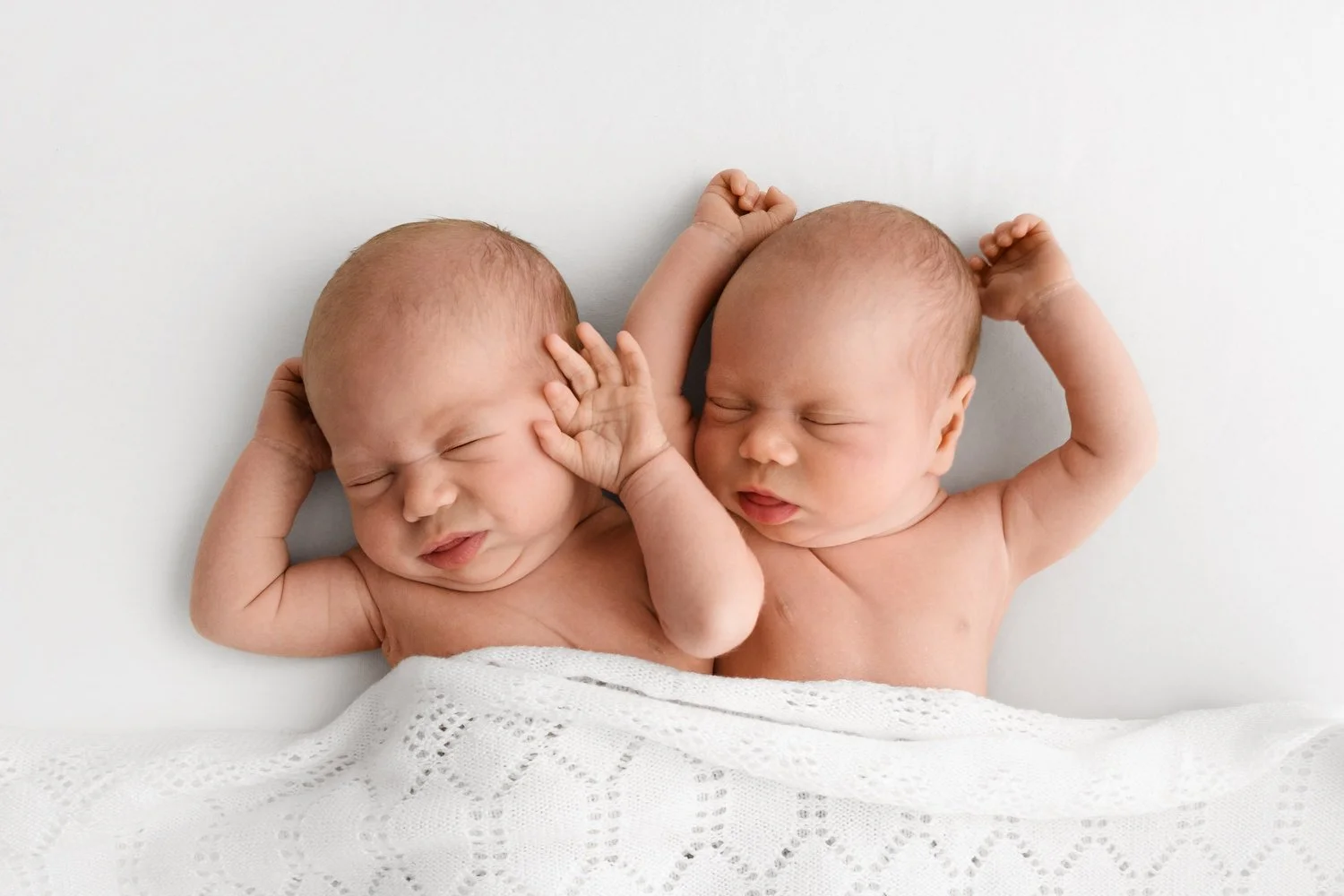
The alternative, lying twins side by side and shooting from a lower angle, creates real technical challenges. The twin closest to the camera will dominate the frame and the further twin will appear slightly smaller and softer in focus. This happens because depth of field works against you when you are shooting horizontally across two subjects at different distances from the lens.
That said, a lower side angle can work beautifully for a couple of images as long as you shoot with each twin at the front in turn. The image below shows exactly this effect. One twin is more prominent and sharper in focus than the other. Used intentionally and balanced by swapping the twins around, this can add variety and depth to a gallery. Whatever you do for one baby you do for the other.
It is also worth remembering that the size difference between twins is real and worth representing honestly. Some twins arrive with a noticeable size difference and some grow at different rates after birth. Showing that variation is a true record of what they were like at this stage and parents value that authenticity.
The overhead angle remains my go to for the majority of twin together shots as it removes all of these challenges entirely.
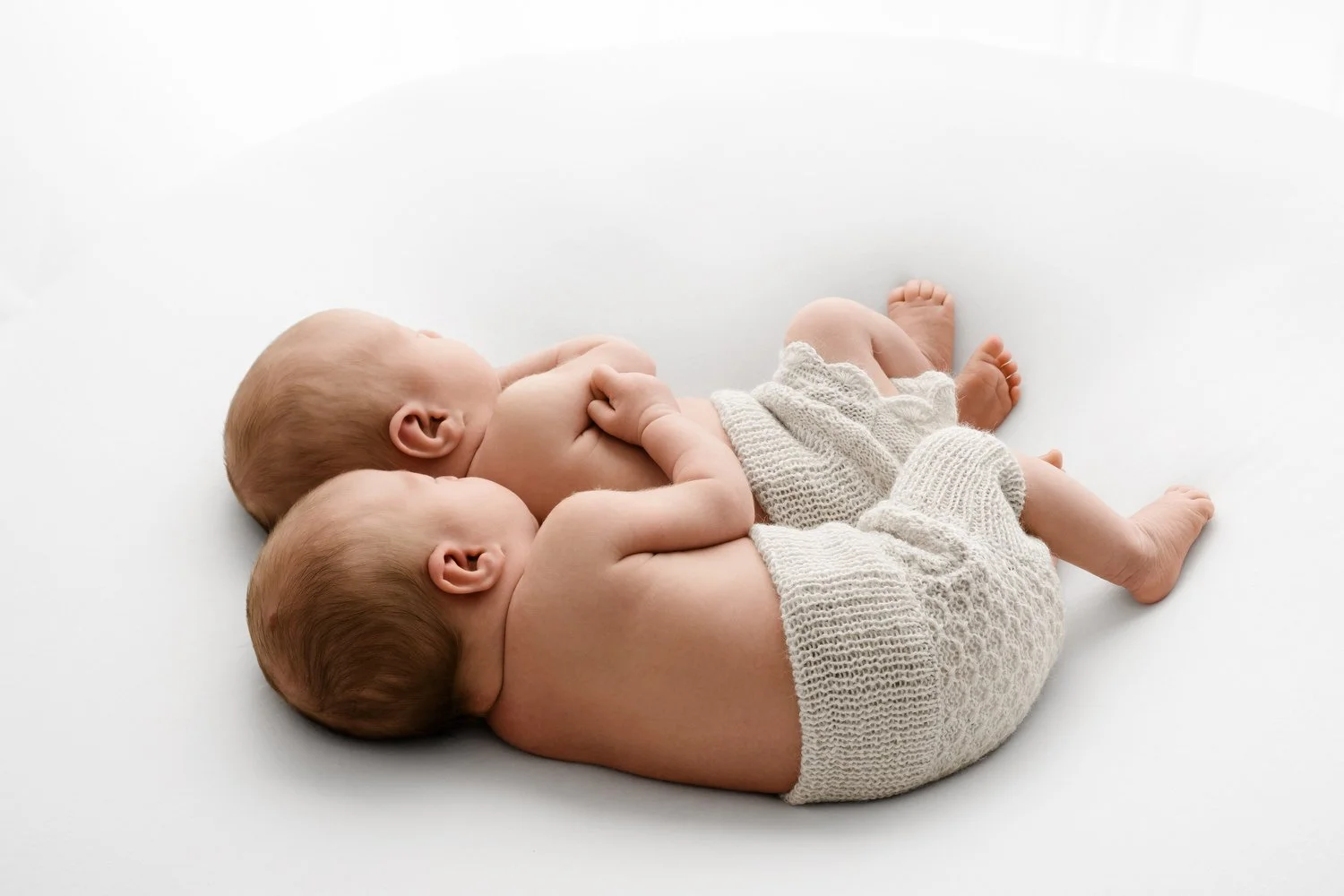
Detail Shots for Twin Sessions
Detail shots are just as important in a twin session as in any other newborn session, but time is tighter and you need to be strategic about it.
If you have time, photograph each baby's feet and hands individually. Those solo detail shots are beautiful and give each twin their own distinct identity within the gallery.
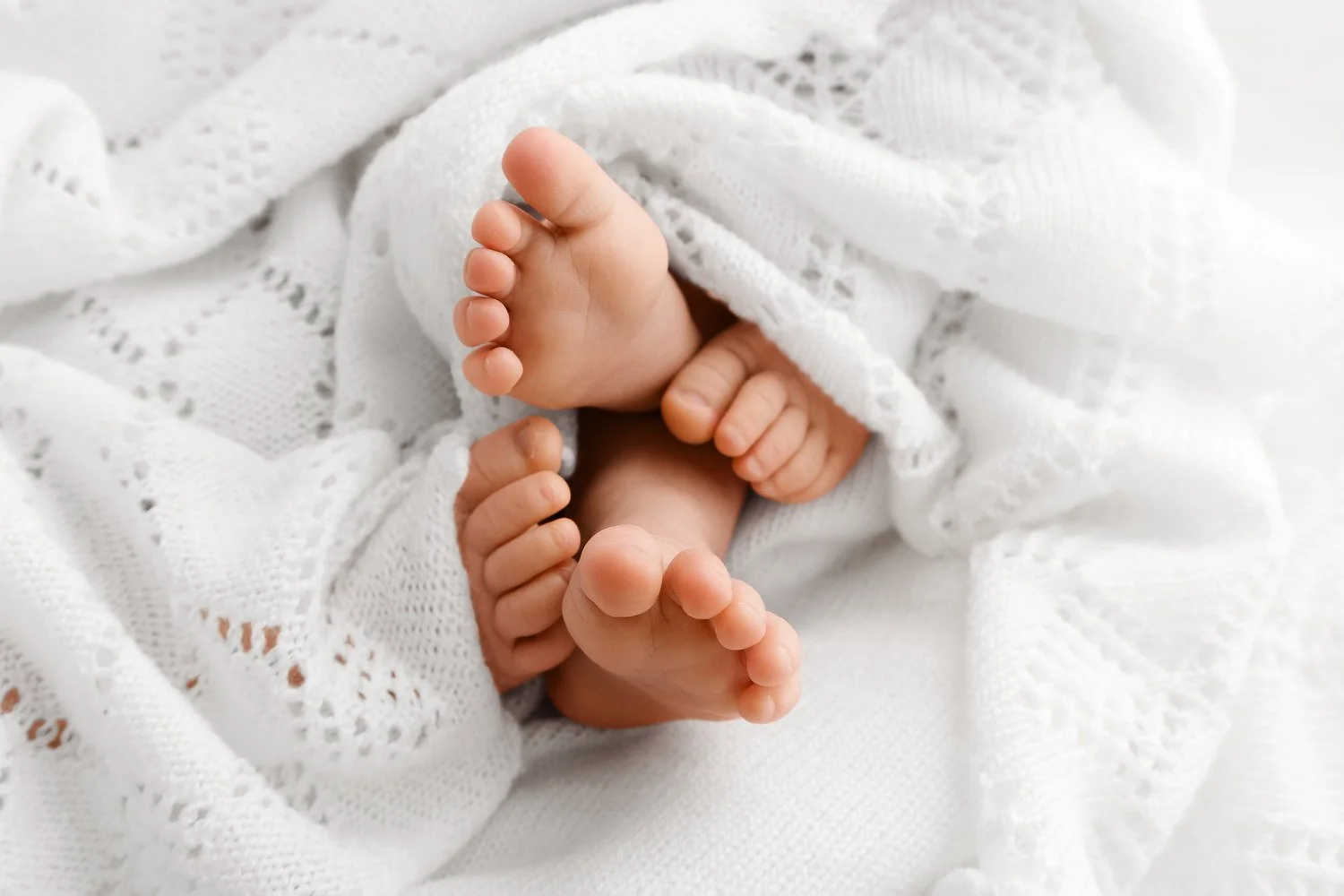
If time is limited, and in a twin session it often is, prioritise detail shots that include both babies together. Two pairs of tiny feet entwined is one of the most emotive images you can create in a twin session. It tells the whole story of their relationship in a single frame. The same applies to hands. If you can gently encourage the babies to hold hands, or simply position their hands close enough together that they appear to be touching, those images will be among the most treasured in the entire gallery.
Always aim for both but if you have to choose, both together beats one alone every time.
Including Parents
Parents of newborn twins, and particularly mums who have just been through a twin pregnancy and possibly a difficult birth, often feel uncertain about being in front of the camera. That is completely understandable and I never push it.
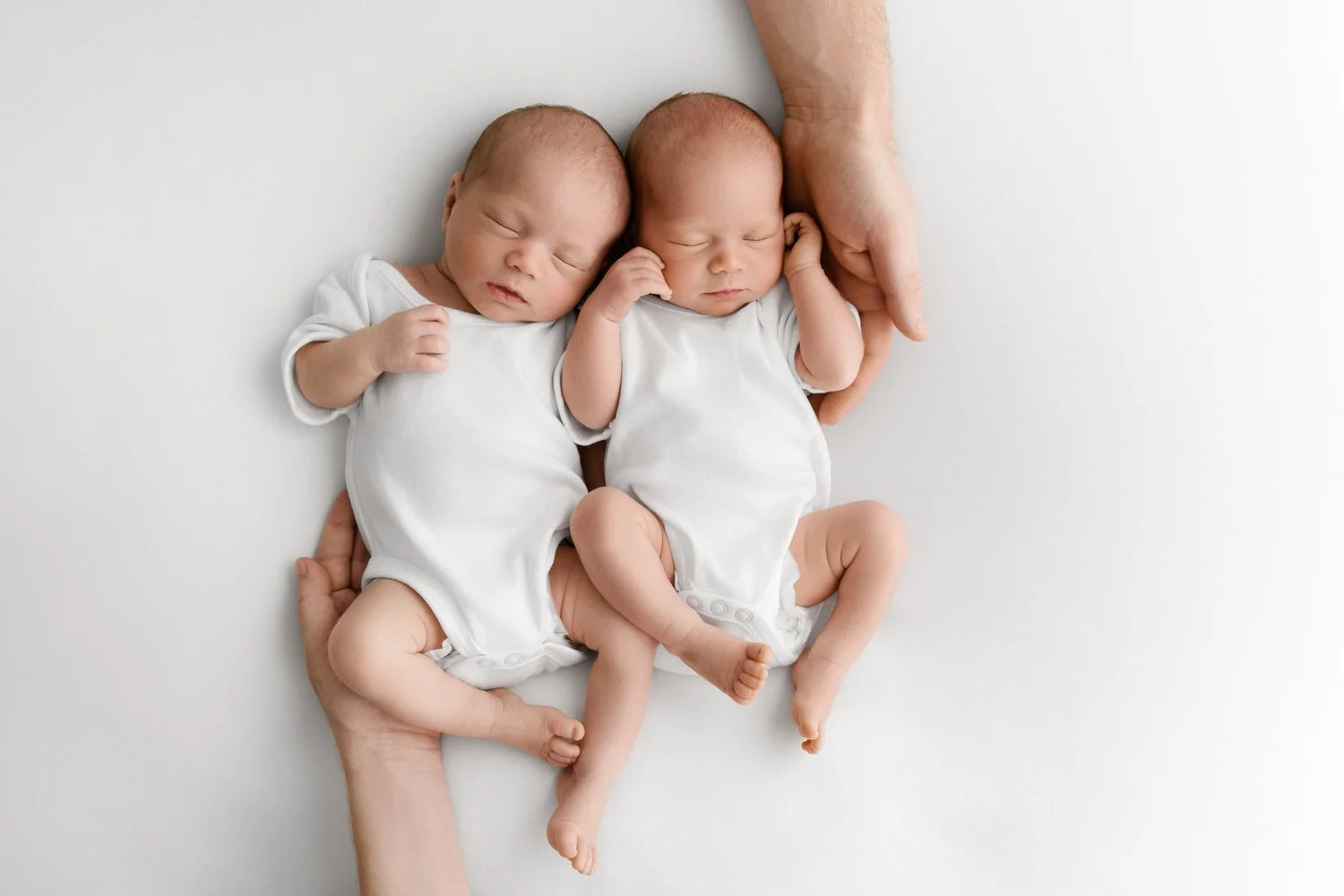
A gentle way to include parents without asking them to be fully in frame is through their hands. A hand cradling a tiny head, fingers wrapped around a newborn fist, a hand resting gently on a baby's back. These small details keep parents present in the story of the session without putting them centre stage. And in years to come, when they look back at those images, they will be so glad they are there.
Settling Two Babies
The rhythm of a twin session is different from a singleton session and it helps to accept that from the start rather than fight against it. You may need to settle one baby while the other feeds, then swap. You may need to pause completely while both babies have a moment. That is not a session going wrong, it is simply two babies doing what newborns do.
Work with whichever baby is most settled first. Get your solo shots while you have a cooperative subject and use that time productively rather than waiting for both babies to be ready simultaneously. Patience and flexibility are the two most valuable skills in a twin session, far more than any technical ability.
Practice Makes the Difference
Knowing your lighting, understanding your camera settings and having a clear posing workflow all make twin sessions significantly more manageable. The more confident you are in your process the more mental space you have to respond to what the babies need rather than thinking about what you are doing next.
I practice my posing using a StandInBaby and for twin sessions I use 2 of them so I can plan setups and compositions before a real session. If you would like to develop your posing skills and twin session confidence in a hands on environment, my in person group workshop Haven covers exactly this.
Twin sessions are a privilege. Two new little lives, one extraordinary family. Approach them with patience, a clear plan and the willingness to adapt and they will be some of the most rewarding sessions you ever shoot.